The archive
Episodes
40 published
Half Your Kitchen Was Invented in the Americas
Corn, potatoes, tomatoes, chocolate, vanilla, chili and rubber were all domesticated by Indigenous nations of the Americas, then handed to the world after 1492 in the Columbian Exchange. (Series finale, Ep. 50. Source: Crosby, 1972.)
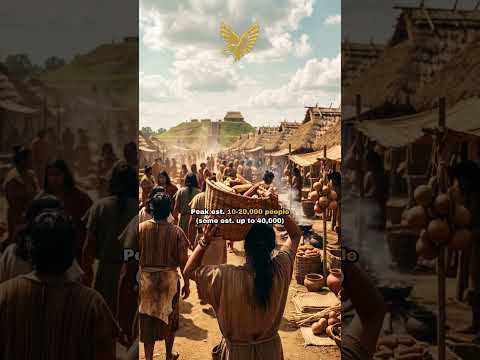
Cahokia - the American City That Rivaled London
Around 1100 CE, Cahokia on the Mississippi was the biggest city north of Mexico - an estimated 10,000–20,000 people, comparable to London of the same era, built by the Mississippian culture. (Sources: Wikipedia; UNESCO WHC #198.)

The Nation Spain Couldn't Conquer
Spain crushed the Aztecs and the Inca - but the Mapuche of southern Chile fought them off for ~300 years and won a treaty in 1641 recognizing them as independent (Americas Quarterly; Britannica).
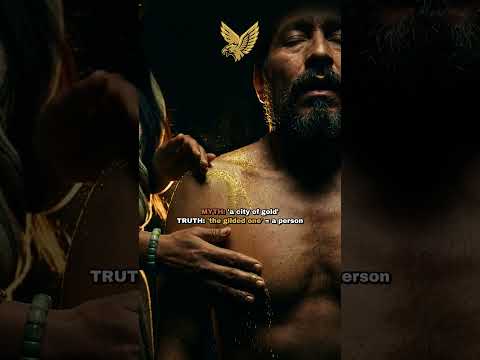
El Dorado Was a Ceremony - Not a City
"El Dorado" means "the gilded one" - originally a Muisca king covered in gold dust who made offerings from a raft on Lake Guatavita. The real proof is a golden raft in Bogotá's Gold Museum. (Sources: World History Encyclopedia; Museo del Oro.)

The Taíno Didn't Fully Vanish
The collapse after 1492 was catastrophic - 80–90% died in ~30 years - but a majority of Puerto Ricans carry Indigenous mtDNA and thousands claim the name Taíno today. (Sources: Martínez-Cruzado 2001; Schroeder et al. 2018, PNAS.)

You've Been Speaking Taíno Your Whole Life
Hurricane, barbecue, canoe, hammock, tobacco - all Taíno words that rode Spanish into English. The Taíno were the first people Columbus met in 1492. (Source: Oxford / Online Etymology Dictionary.)
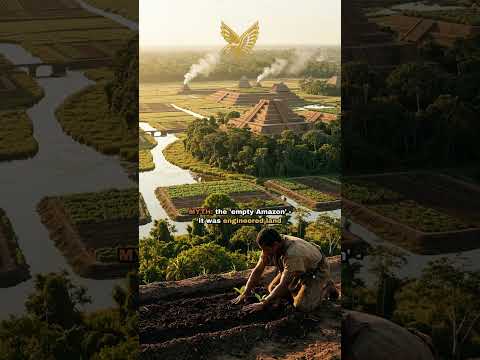
LIDAR Found Lost Cities Under the Amazon
Airborne laser scanning (LIDAR) revealed Casarabe-culture cities under the Bolivian Amazon - earthen pyramids up to 21m, causeways and canals, built ~500–1400 AD. The "empty jungle" was engineered. (Prümers et al., Nature 2022.)
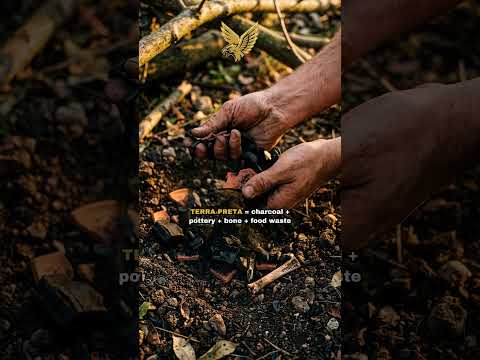
The Amazon Was a Garden - Not a Wilderness
The "untouched" Amazon is a myth - pre-Columbian peoples built terra preta, a black super-soil so fertile it still out-farms the jungle, and the Kuikuro still make it. (Science Advances 2023; Nature 2022.)

Chile Peppers Conquered the Planet
Every chili on Earth was domesticated in the Americas - C. annuum in Mexico ~6,000 years ago - and Korea, India and Thailand had zero chili heat until after 1492. (Source: Kraft et al. 2014, PNAS.)

Corn Didn't Exist - Indigenous Farmers Built It
Modern corn has no wild ancestor. ~9,000 years ago in Mexico's Balsas valley, Indigenous farmers engineered it from teosinte - a grass with 5–12 stony kernels - into a cob of hundreds. (Matsuoka et al. 2002, PNAS.)
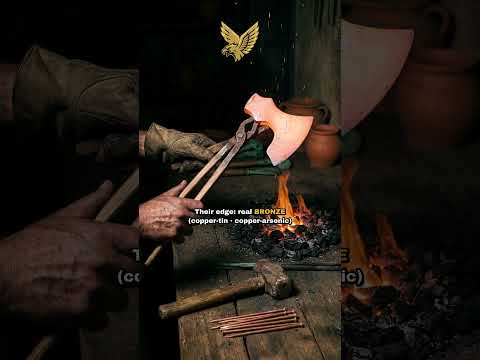
The Kingdom the Aztecs Couldn't Conquer
The Purépecha (Tarascan) state of Michoacán defeated an Aztec invasion under Axayacatl in the 1470s - partly because they worked real bronze while most of Mesoamerica used stone. (Source: Purépecha Empire & Metallurgy in pre-Columbian Mesoamerica, Wikipedia.)
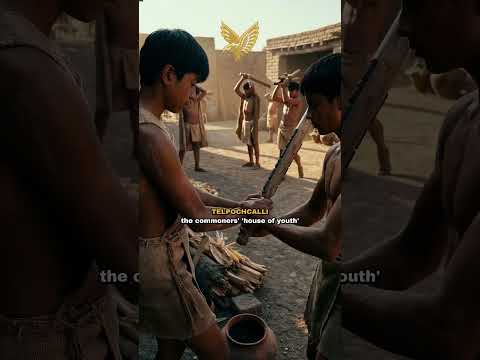
The Aztecs May Have Sent Every Kid to School
Mexica (Aztec) records suggest schooling was mandatory for nearly every child - noble, commoner, enslaved, girls included - one of the first universal education systems on Earth. Sources: Codex Mendoza; Sahagún's Florentine Codex.
The Market That Stopped the Conquistadors Cold
Cortés estimated 60,000 people trading in a single day at Tlatelolco - with judges and inspectors enforcing fair trade. Bernal Díaz wrote they'd never seen anything like it. (Sources: Cortés, Second Letter, 1520; Bernal Díaz, Historia verdadera.)

A Twin Aqueduct and a 16 km Dike Built the Aztec Capital
Tenochtitlan sat on an island in a brackish lake - so the Mexica ran a twin-channel aqueduct from Chapultepec's springs and walled off the salt with a ~16 km dike. (Sources: Chapultepec aqueduct, Wikipedia; Nezahualcóyotl dike, MDPI Land 2022.)
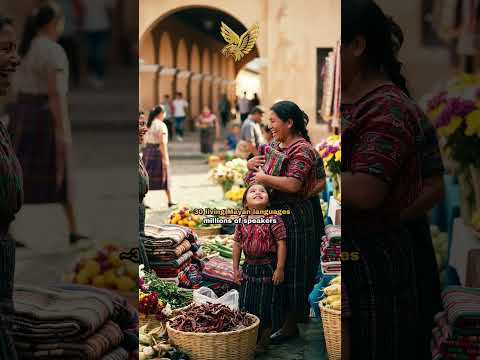
The Maya Never "Vanished" - 6 Million+ Are Alive Right Now
The "mysterious Maya disappearance" is a myth: the 9th-century collapse hit southern cities' politics, while Chichén Itzá peaked afterward - and 6 million+ Maya speak ~30 living Mayan languages today. (Sources: PNAS; Ethnologue; NobelPrize.org.)

Maya Blue: the pigment that won't fade
The Maya fused indigo and clay into a hybrid nanomaterial so tough that jungle, acid rain, and 12 centuries couldn't fade it - chemists only cracked how recently. (Van Olphen 1966; Chiari et al. 2003.)

Cochineal - The Bug That Painted the World Red
Cochineal - a scale insect farmed on Oaxacan cactus - was Spain's #2 colonial export after silver, and it's still in your food today as E120. (Sources: Wikipedia; Science History Institute.)

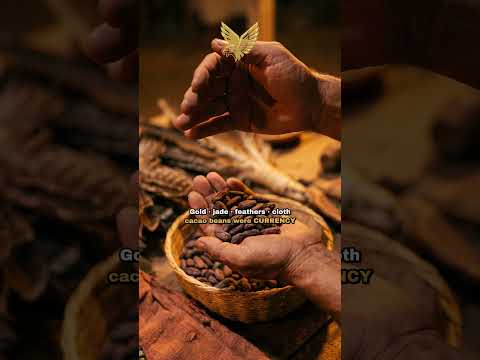
Cacao Was Money - and Yes, People Counterfeited It
In the Aztec world cacao beans were money - a turkey cost 100, a rabbit 30 (per a 1545 Tlaxcala price list) - and people counterfeited them by stuffing hollow shells with mud and avocado pits (Sahagún's Florentine Codex).

Chinampas: the "Floating Farms" That Didn't Float
The Mexica built farmland on a lake - staked mud islands anchored by willow roots, up to 7 harvests a year, feeding a city of 200,000. And they never actually floated. (Sources: Wikipedia, World History Encyclopedia, UNESCO, FAO GIAHS.)

Nixtamal - the Chemistry That Made Corn Safe
Mesoamericans soaked maize in lime to free its niacin - the science that let civilizations live on corn. When Europe and the US skipped the step, pellagra epidemics followed. (Sources: Wikipedia - Nixtamalization & Pellagra.)

The Olmec Made Rubber 3,000 Years Before Goodyear
By 1600 BC the Olmec of Mexico were cooking tree latex with morning-glory vine to make bouncing rubber balls - the oldest rubber on Earth. (Science 1999; MIT News 2010.)

The Maya Filtered Their Water With Crystal
2,000 years ago the Maya at Tikal filtered their drinking water through zeolite and quartz crystal - the oldest known zeolite water purification on Earth (Tankersley et al. 2020, Scientific Reports).

The Best-Preserved Mummies on Earth Are Frozen on the Andes
Juanita on Ampato (1995) and three children on Llullaillaco (1999) are among the best-preserved mummies on Earth, and the science rewrote what we know about the Inca rite of capacocha. (Source: Wilson et al. 2013, PNAS.)

The Inca Protected Bird Poop - With the Death Penalty
Seabird guano was the richest fertilizer on Earth - up to 16% nitrogen - and the Inca guarded the islands that made it. The death-penalty detail comes from chronicler Garcilaso de la Vega (1609).

The Bronze-Age Factory That Beat the Inca by 500 Years
Before the Inca, Peru's Sicán ran industrial-scale smelting at Batán Grande - pouring arsenical bronze by the ton and faking 24-karat gold with acid. (Source: Scientific American / Shimada et al.)

Freeze-Dried Food - 500 Years Before the Freezer
Aymara and Quechua farmers turned potatoes into chuño using night frost, day sun and bare feet - a freeze-dried food that kept for years in Inca stone warehouses. (Sources: Wikipedia; Atlas Obscura.)

2,000-Year-Old Cloth Modern Weavers Had to Relearn
The finest Paracas cloth from ancient Peru packs ~200 threads per inch - vs. 60–80 in European textiles of the era - and one signature stitch was so intricate weavers had to relearn it. (Sources: Brooklyn Museum; Penn Museum.)

Nazca Puquios - Desert Aqueducts Still Flowing
In one of Earth's driest deserts, the Nazca of Peru cut spiral wells and stone tunnels down to groundwater - and dozens still water farms ~1,500 years later. (Most archaeologists date them to ~500 CE. Sources: Puquios/Wikipedia; Lasaponara & Masini.)

An Empire Written in Knots
The Inca ran an empire of millions with no alphabet - they recorded it in knotted cords called quipu, a base-10 number system. The math is proven; whether they wrote language too is still debated. (Sources: Britannica; Medrano & Urton 2018.)

An Amazon Arrow Poison Is Why Modern Surgery Doesn't Fight Back
Curare, an Amazon arrow poison, paralyzes muscles - and in 1942 it opened the door to the muscle relaxants used in surgery today. Sources: McGill OSS; CSA; Amazon Conservation Team.

510 Medicines - and Most Were Here Before Europe
A survey of northern Peru found 510 medicinal plants still in use - 83% native to Peru, not imported. Source: Bussmann & Sharon 2006.

The Grass Bridge Rewoven by Hand - Every Year for 500 Years
Q'eswachaka is the last Inca rope bridge - made of grass, not steel, and rebuilt by hand every June by four Quechua communities in Canas, Peru. UNESCO protected the ritual in 2013.

The Aztec Capital Was Cleaner Than London
Tenochtitlan had a twin aqueduct, public toilets, daily street cleaning, and steam baths - cleaner than 1500s European cities. Sources: Tortajada et al. (IWA); Mexicolore.

Clean Water as Medicine: The Inca Kept the Sewage Out - By Design
Inca engineers piped spring water 750m to 16 fountains at Machu Picchu and kept runoff out by design. Sources: Wright et al., Ground Water 1997; WaterHistory.org.

They Drilled Into a Living Skull - and the Patient Survived
Inca skull surgery survived at up to 80% while Civil War surgery killed about half - plus Aztec hospitals and the 1552 Badianus Manuscript. Sources: Andrushko/Verano; Ortiz de Montellano.
The Cactus Andean Healers Drink to See Your Illness
San Pedro (wachuma) is an Andean healing cactus carved in stone at Chavín ~750 BC and still used by curanderos today. Sources: Stela of the Cactus Bearer; ICEERS.

They Amputated a Foot 1,000 Years Ago - and He Walked Again
The Moche of Peru amputated feet ~1,500 years ago and patients survived and walked again, with ceramic prosthetics. Sources: Verano, Anderson & Franco 2000; PMC.

They Opened Skulls and Patients Lived. Nobody Knows How They Killed the Pain.
Inca surgeons did brain surgery with high survival - but how did they handle the pain? The coca-anesthesia story is a myth. Sources: Nat Geo (Andrushko 2008); ACS Bulletin.

The Inca "Cured Malaria" - Except There Was No Malaria
Did the Inca discover quinine to cure malaria? Actually there was no malaria in the Americas before 1492 - here's the real cinchona story. Sources: CDC EID; PMC review.

The Inca Had a Licensed Doctor - Your Pharmacist AND Your Surgeon
The Inca Empire had an official doctor - the hampicamayoc - who was both pharmacist and surgeon. Sources: Elferink (Revista de Indias); Marino & Gonzales-Portillo, Neurosurgery 2000.