Nº 46
The Taíno Didn't Fully Vanish
Your history book says the Taíno went extinct. Your DNA might say otherwise - because a majority of Puerto Ricans carry Indigenous mitochondrial DNA.
You were taught the Taíno - the first people Columbus met - were wiped out. Gone. Extinct. And the collapse was terribly real: within about thirty years, an estimated eighty to ninety percent died.
Disease. Enslavement. Forced labor in the mines. This was catastrophe, not a footnote - and we will never round it down.
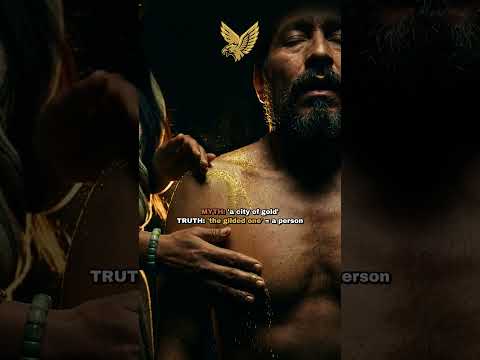
But "extinct" is the myth
The collapse happened. What didn't happen is the ending the textbooks give it. The Taíno didn't fully vanish - they survived, blended, and endured.
The DNA - carried mother to child
A DNA study found a majority of Puerto Ricans carry Indigenous mitochondrial DNA - passed mother to child, unbroken, for centuries. We say "a majority," not a single hard number, because the exact figure varies by sample: an unbiased representative sample came in around 52.6%, a later representative estimate around 61.3%. Either way, it's most of the island - a maternal line that never broke. A 2018 ancient-genome study went further, tying a roughly 1,000-year-old precontact Taíno woman to living Caribbean people; present-day Puerto Ricans also carry about 10–15% Native American ancestry related to her genome.
You speak Taíno every day
The language never left either. Hurricane - from hurakán. Hammock - from hamaca. Barbecue - from barbacoa. Canoe - from canoa. Everyday words whose very names are Taíno, hiding in plain sight. And today, thousands proudly claim the name Taíno again - a living revival, plus the 9,399 people who marked "Taíno" on the 2010 U.S. census.
A people the books buried - still here, in blood and in words. Mexican by name. American by history.
| Claim | Confidence | Sources |
|---|---|---|
| The myth being corrected: that the Taíno went completely extinct. Ancient-DNA and population-genetic evidence proves indigenous Caribbean ancestry survived to the present - assimilation, not total extinction. | Myth-corrected | Schroeder et al. 2018, "Origins and genetic legacies of the Caribbean Taino," PNAS (PubMed) · University of Cambridge press release (2018) · Taíno - Wikipedia (survival & revival, cited) |
| The demographic collapse was real and catastrophic: an estimated 80–90% of the Taíno died within ~30 years of 1492, from epidemic disease, enslavement, forced encomienda labor, famine and violence. | Solid | Taíno - Wikipedia (population collapse, cited to Las Casas, Reséndez) · National Geographic (2018) |
| A majority of Puerto Ricans carry Indigenous (Amerindian) mitochondrial DNA, inherited through the maternal line - evidence of Taíno maternal continuity. (Unbiased representative sample ≈ 52.6%; a later representative estimate ≈ 61.3%.) | Solid | Martínez-Cruzado et al. 2001, "Mitochondrial DNA Analysis Reveals Substantial Native American Ancestry in Puerto Rico," Human Biology (PubMed) · Human Biology 73(4) full record (Wayne State) |
| Autosomal ancestry of present-day Puerto Ricans includes roughly 10–15% Native American ancestry closely related to the ~1,000-year-old precontact Bahamian Taíno genome. | Solid | Schroeder et al. 2018, PNAS (PubMed) · University of Cambridge (2018) |
| Everyday English words are Taíno loanwords: hurricane (hurakán), hammock (hamaca), barbecue (barbacoa), canoe (canoa) - plus tobacco, maize, iguana and more. | Solid | Taíno language - Wikipedia (loanwords, cited) · SpanishDict - words of Taíno origin |
| A living Taíno revival exists and thousands self-identify as Taíno today (the 2010 U.S. census recorded 9,399 identifying as "Taíno"; descendant communities persist in eastern Cuba and across the diaspora). | Solid | Taíno - Wikipedia (revival & census self-identification, cited) · National Geographic (2018) |