Nº 43
The Amazon Was a Garden - Not a Wilderness
The 'untouched' Amazon is a myth. This black super-soil is proof - people built the rainforest's most fertile dirt, and it's still farming today.
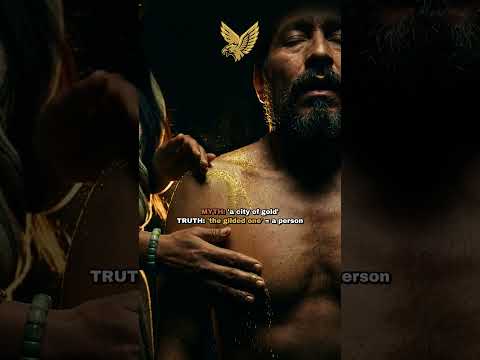
You've been told the Amazon is pristine, untouched wilderness. That's the myth. Because scattered through the rainforest is black super-soil - and it didn't grow there. People made it.
It's called terra preta - Amazonian dark earth. Charcoal, pottery shards, bone, and food waste, packed into the ground on purpose over centuries.
The recipe, not magic
Normal jungle soil is thin and poor. Terra preta? Crops grow up to 45% better in it - with no fertilizer at all. Built by hand, a thousand years ago, and it still holds its nutrients today.
Lost cities under the canopy
And here's the kicker: laser scans found lost cities, roads, and orchards hiding under the trees. Not empty forest - a managed garden. The Amazon wasn't a void that Europeans stumbled into; it was home to millions of people who shaped the land they lived on.
A living science, not a lost secret
And it's not ancient mystery. The Xingu's Kuikuro people still make dark earth today - their eegepe, the same recipe their ancestors used, matching thousand-year-old soil in composition. This is a living practice, honored in the present tense, not a vanished civilization's forgotten trick.
The Amazon wasn't wild. It was engineered. Mexican by name. American by history.
| Claim | Confidence | Sources |
|---|---|---|
| Terra preta ("Amazonian dark earth") is anthropogenic - human-made by adding charcoal, broken pottery, bone, and organic/food waste to poor Amazonian soil over centuries. | Solid | Terra preta - Wikipedia (w/ citations) · Schmidt et al. 2023, Science Advances (adh8499) · MIT News 2023 |
| Terra preta is far more fertile than surrounding thin/acidic jungle soil - yields rise roughly 38–45% without fertilization vs unfertilized surrounding soil; it retains nutrients for centuries and is still farmed/valued today. | Solid | Terra preta - Wikipedia (yield uplift, citations) · Eos / AGU - "Nutrient-Rich Legacy" |
| The pre-Columbian Amazon supported large, dense, managed populations - LIDAR reveals cities, causeways, plazas and earthworks under the canopy, and domesticated-tree clusters - not "pristine, untouched wilderness." | Myth-corrected | Prümers et al. 2022, Nature - LIDAR urbanism, Bolivian Amazon · Science / AAAS - managed forest & dark earth |
| The Amazon was not empty: dark earth and managed landscapes imply millions of people (population estimates vary widely; terra preta covers ~0.1% up to as much as ~10% of Amazonia by different studies - we say "millions," not a hard figure). | Contested | Terra preta - Wikipedia (coverage range) · Eos / AGU - Indigenous shaping of the forest |
| The making of dark earth is a living practice - the Kuikuro of the Upper Xingu still create it (their eegepe), and modern middens match ancient terra preta in composition. | Solid | Schmidt et al. 2023, Science Advances (Kuikuro/eegepe) · MIT News 2023 |