
The archive · Journey stop
Mesoamerica
15 published · All episodes →
Chile Peppers Conquered the Planet
Every chili on Earth was domesticated in the Americas - C. annuum in Mexico ~6,000 years ago - and Korea, India and Thailand had zero chili heat until after 1492. (Source: Kraft et al. 2014, PNAS.)

Corn Didn't Exist - Indigenous Farmers Built It
Modern corn has no wild ancestor. ~9,000 years ago in Mexico's Balsas valley, Indigenous farmers engineered it from teosinte - a grass with 5–12 stony kernels - into a cob of hundreds. (Matsuoka et al. 2002, PNAS.)
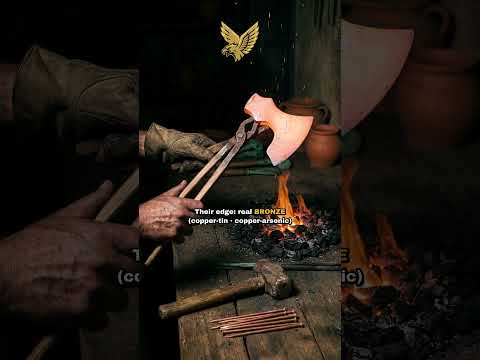
The Kingdom the Aztecs Couldn't Conquer
The Purépecha (Tarascan) state of Michoacán defeated an Aztec invasion under Axayacatl in the 1470s - partly because they worked real bronze while most of Mesoamerica used stone. (Source: Purépecha Empire & Metallurgy in pre-Columbian Mesoamerica, Wikipedia.)
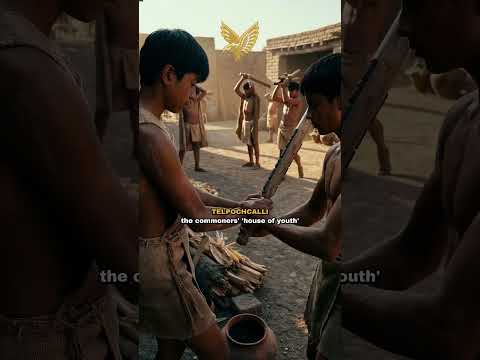
The Aztecs May Have Sent Every Kid to School
Mexica (Aztec) records suggest schooling was mandatory for nearly every child - noble, commoner, enslaved, girls included - one of the first universal education systems on Earth. Sources: Codex Mendoza; Sahagún's Florentine Codex.
The Market That Stopped the Conquistadors Cold
Cortés estimated 60,000 people trading in a single day at Tlatelolco - with judges and inspectors enforcing fair trade. Bernal Díaz wrote they'd never seen anything like it. (Sources: Cortés, Second Letter, 1520; Bernal Díaz, Historia verdadera.)

A Twin Aqueduct and a 16 km Dike Built the Aztec Capital
Tenochtitlan sat on an island in a brackish lake - so the Mexica ran a twin-channel aqueduct from Chapultepec's springs and walled off the salt with a ~16 km dike. (Sources: Chapultepec aqueduct, Wikipedia; Nezahualcóyotl dike, MDPI Land 2022.)
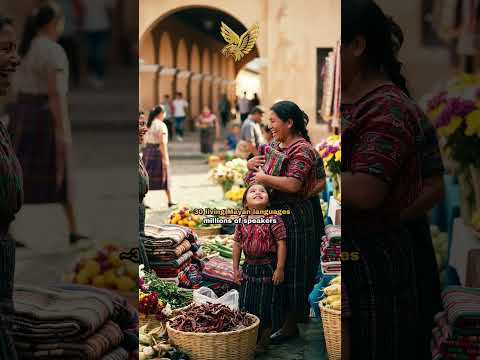
The Maya Never "Vanished" - 6 Million+ Are Alive Right Now
The "mysterious Maya disappearance" is a myth: the 9th-century collapse hit southern cities' politics, while Chichén Itzá peaked afterward - and 6 million+ Maya speak ~30 living Mayan languages today. (Sources: PNAS; Ethnologue; NobelPrize.org.)

Maya Blue: the pigment that won't fade
The Maya fused indigo and clay into a hybrid nanomaterial so tough that jungle, acid rain, and 12 centuries couldn't fade it - chemists only cracked how recently. (Van Olphen 1966; Chiari et al. 2003.)

Cochineal - The Bug That Painted the World Red
Cochineal - a scale insect farmed on Oaxacan cactus - was Spain's #2 colonial export after silver, and it's still in your food today as E120. (Sources: Wikipedia; Science History Institute.)

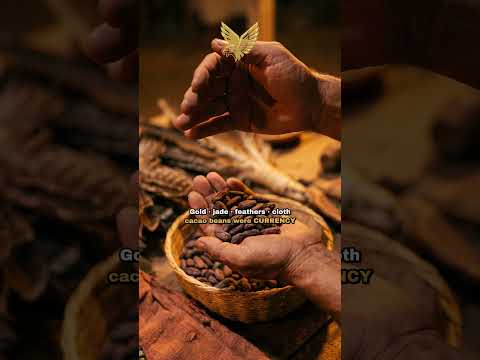
Cacao Was Money - and Yes, People Counterfeited It
In the Aztec world cacao beans were money - a turkey cost 100, a rabbit 30 (per a 1545 Tlaxcala price list) - and people counterfeited them by stuffing hollow shells with mud and avocado pits (Sahagún's Florentine Codex).

Chinampas: the "Floating Farms" That Didn't Float
The Mexica built farmland on a lake - staked mud islands anchored by willow roots, up to 7 harvests a year, feeding a city of 200,000. And they never actually floated. (Sources: Wikipedia, World History Encyclopedia, UNESCO, FAO GIAHS.)

Nixtamal - the Chemistry That Made Corn Safe
Mesoamericans soaked maize in lime to free its niacin - the science that let civilizations live on corn. When Europe and the US skipped the step, pellagra epidemics followed. (Sources: Wikipedia - Nixtamalization & Pellagra.)

The Olmec Made Rubber 3,000 Years Before Goodyear
By 1600 BC the Olmec of Mexico were cooking tree latex with morning-glory vine to make bouncing rubber balls - the oldest rubber on Earth. (Science 1999; MIT News 2010.)

The Maya Filtered Their Water With Crystal
2,000 years ago the Maya at Tikal filtered their drinking water through zeolite and quartz crystal - the oldest known zeolite water purification on Earth (Tankersley et al. 2020, Scientific Reports).

The Aztec Capital Was Cleaner Than London
Tenochtitlan had a twin aqueduct, public toilets, daily street cleaning, and steam baths - cleaner than 1500s European cities. Sources: Tortajada et al. (IWA); Mexicolore.